
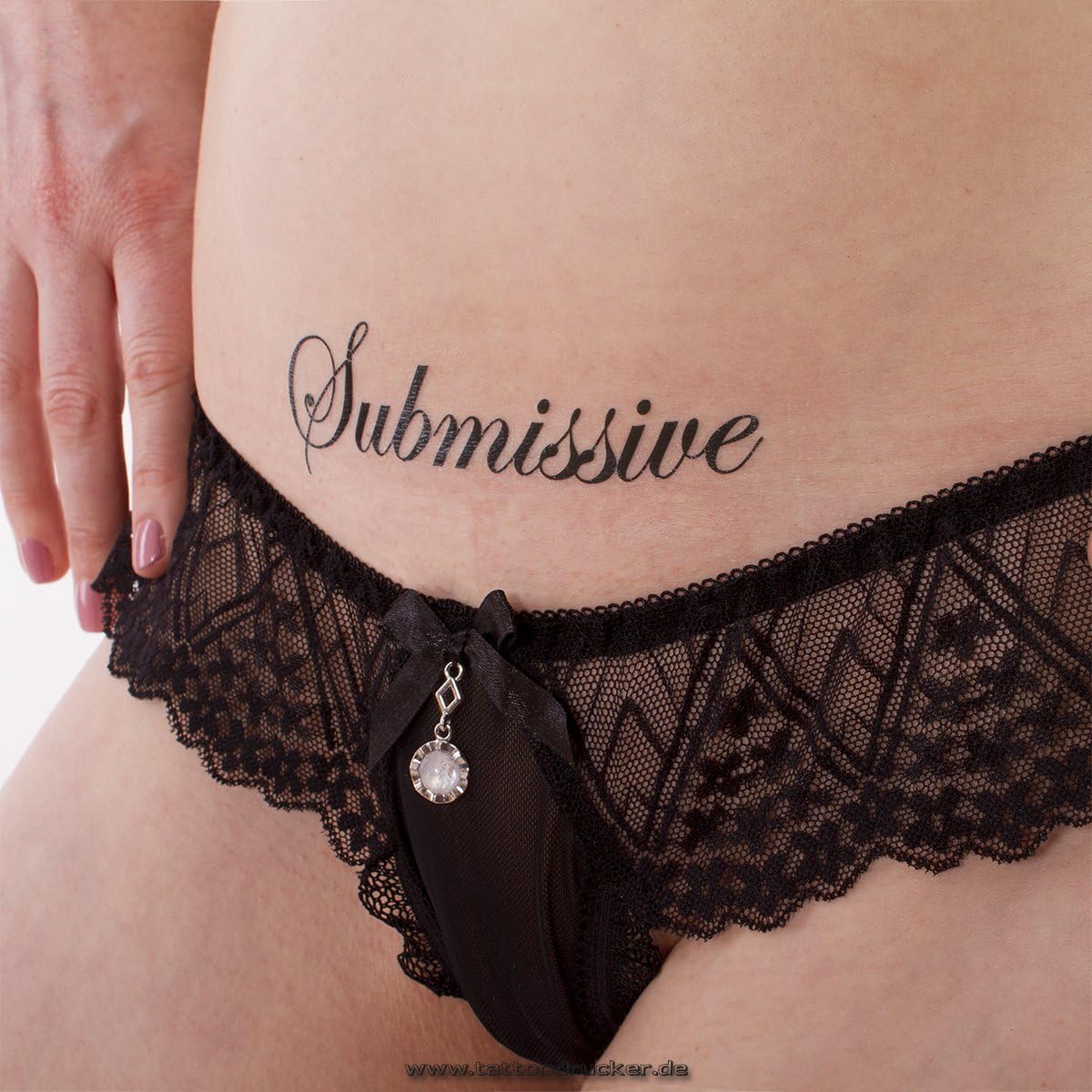
2 x "Submissive" Tattoo lettering in black - Sexy Kinky BDSM Tattoo (2)
FREE Shipping
2 x "Submissive" Tattoo lettering in black - Sexy Kinky BDSM Tattoo (2)
- Brand: Unbranded
Description
Branding is using a hot iron or a heated tool to brand a design or motif into the skin through burning. Historically, slaves and cattle were branded by their masters to designate ownership. This is potent symbolism in the context of BDSM marking. Though, there are other things that can be done, if a collar is not appropriate. Perhaps you might want to wear other jewelry, such as an 'o' ring or some sort of anklet or bracelet. There are many items of jewelry out there that are innocent enough unless you're 'in the know'. One jeweler, I like in particular is Finally, above her pussy that is about to be hungrily eaten by a guy on his knees, is two old school revolvers pointing down at it. For me, this is the holy trinity of whore tattoos. Bonus: Where’s the best place to watch tattoo whore porn? While tattooing is very widespread and popular today, for many people, it is still an act of rebellion, independence, tribal or ritual marking, or a sexual pleasure. I have my own gripes about anal lube. It’s expensive to find good stuff and there’s a lot of junk out there.
On her thigh, she has an awesome tattoo of an old whore from the Wild West era, the type of vintage tattoo often seen on old sailors. For me, it said he was serious about being my Dom and that he wanted me to belong to him. Maybe, a bit like the first romantic gift a boyfriend buys, only, different in so many ways. The moment was very special to me since it was the collar he had made just for me and that he wanted just me. Unfortunately, the G-string obscures the tattoo partially, but I imagine this Asian whore gets a lot of attention in bars when wearing a revealing crop top. A submissive tattoo can have a variety of different meanings. It can be a way for the submissive to show their love and devotion to their partner. It can also be a way for the submissive to show their willingness to be controlled by their partner.
Spicevids videos
If I was a rimjob lover, I’m sure that tasteful whore art would be a welcoming sight before planting my face between her ass cheeks. BDSM tattoo slut
This design doesn’t have to be overtly sexual. It can be something as simple as a bondage knot or a whip. These tattoos are very personal and often hold a lot of meaning for the wearer. To BDSM symbols, we also can relate the BDSM logo tattoo. It is a trendy tattoo design that is often seen inked on the bodies of BDSM enthusiasts. This design consists of the letters “B”, “D”, “S”, and “M” which are the initials for “Bondage”, “Domination”, “Submission”, and “Masochism” respectively. The four letters are often seen interwoven together in a complex design, and they may also be accompanied by other symbols that are associated with the BDSM lifestyle.The idea of a BDSM slave tattoo is very appealing, no doubt. However, it is also very permanent. Although, there are ways to take out tattoos, these ways are expensive and the tattoos don't clean off completely. These BDSM symbols match the shields above with their plus-sign cross or upwards arrow, but enclosed in a circle. They are worn by male or female slaves. The circle represents a collar and means the owned submissive is in a closed relationship. The designer wanted the triskelion to be enigmatic and elusive. The emblem would hold many layers of meaning for the BDSM community but not attract attention from the vanilla world.
I know that, initially, I said this article was steering away from generic tramp stamps. But some are just too good to pass up featuring on this list. How long was the session, did you do anything special to prepare? I did nothing special. I just ate healthy and slept enough, spent my day chilling before the long-awaited hour with all the protagonists. Maybe two hours. I can’t be clear about that. It seemed fast but enough, I felt nauseous at the end. We stopped just in time. The suspension, especially on the chest, was quite harsh and violent but super nice at the same time. The Private porn network has been around since 1965, so it’s safe to say they know a thing or two about kinky smut! Tattoos are for life and if you feel getting such a tattoo could negatively impact your professional or family life, don’t get one.
Most professional dominatrixes have a largely male clientele and they organize their sessions in a designated professional space, referred to as a dungeon. A dominatrix typically takes on a professional name, preceded by Dominatrix, Mistress, Madame, Lady, Herrin or Goddess. Male dominants are prevalent in the professional BDSM scene, however, they primarily cater to a gay male demographic.
Amongst millennials, the whole eating ass thing has become very popular. Apparently spurred on by rappers like Young Thug and artists like Cardi B, the rimjob is now a popular sex act. Temporary tattoos are a fun way to experiment and enjoy BDSM marking symbolically without the permanent commitment. 12. Body Piercing It really is a very personal thing. What means ownership to me might not be the same as what it might mean to someone else, but I'll share my thoughts with you. I’m telling you, pussy piercings and slutty tattoos go together like cheese and wine. Don’t you agree? She’s a whore and doesn’t care who knows itThis can be anything from cumslut above a girl’s pussy to the word “Pornstar” incorporated into her asshole. Ensure you adhere to all the aftercare advice your piercer or tattooist gives you! Even if it might interfere with the kinky and sexy time you and your partner fantasized about regarding your slave tattoo. There’s nothing sexy about a newly tattooed area getting infected.
- Fruugo ID: 258392218-563234582
- EAN: 764486781913
-
Sold by: Fruugo